
Workshops

Technologies for a Circular Economy
Workshop at the 2025 IEEE SusTech Conference.
Date: 20 April 2025, 8 AM to 5 PM
Location: Embassy Suites by Hilton Santa Ana Orange County Airport, Santa Ana, California, USA. Pacific Ballroom.
Registered Participants: Please help the moderators prepare by filling out this quick questionnaire:

Program Grid:
| Item | Time | Speaker | Title |
|---|---|---|---|
| 1a | 8:00 – 8:15 | Carole Graas | Welcome and Logistics |
| 1b | 8:15 – 8:35 | Maike Luiken | Introduction to Circularity |
| 1c | 8:35 – 8:55 | Wei-Jen Lee | Workshop Organization |
| 1d | 8:55 – 9:00 | Q&A | |
| 2 | 9:00 – 9:45 | Alan Booker | Learning from Nature’s Approach to a Circular Economy |
| 3 | 9:45 – 10:00 | Break | |
| 4 | 10:00 – 10:30 | Ravinder Dahiya | Circular Electronics |
| 5 | 10:30 – 11:00 | Babu Chalamala and Wei-Jen Lee | Fireside chat on Lithium Batteries Recycle and Reuse |
| 6 | 11:00 – 11:30 | David Snyder | Carbon Dioxide Pollution |
| 7 | 11:30 – 12:30 | Lunch | |
| 8 | 12:30 – 1:45 | All Authors, Wei-Jen Lee moderating | Q&A / Panel about Circularity |
| 9a | 1:45 – 2:00 | Forum breakout Groups / stretch break | |
| 9b | 2:00 – 3:30 | Breakout Groups | |
| 10 | 3:30 – 3:45 | Break | |
| 11 | 3:45 – 4:30 | Group Reports | |
| 12a | 4:30 – 4:45 | Ed Perkins | Introduction to the SusTech Conference |
| 12b | 4:45 – 5:00 | Maike Luiken and Wei-Jen Lee | Conclusion and Next Steps |
Presentation Topics and Speakers:
Talk Title: Learning from Nature’s Approach to a Circular Economy.
Abstract: Perfected over a four billion year R&D program, nature’s solutions to creating a circular economy have a lot to teach us about building regenerative and sustainable human technology.
Alan Booker, President, Executive Director, The Institute of Integrated Regenerative Design
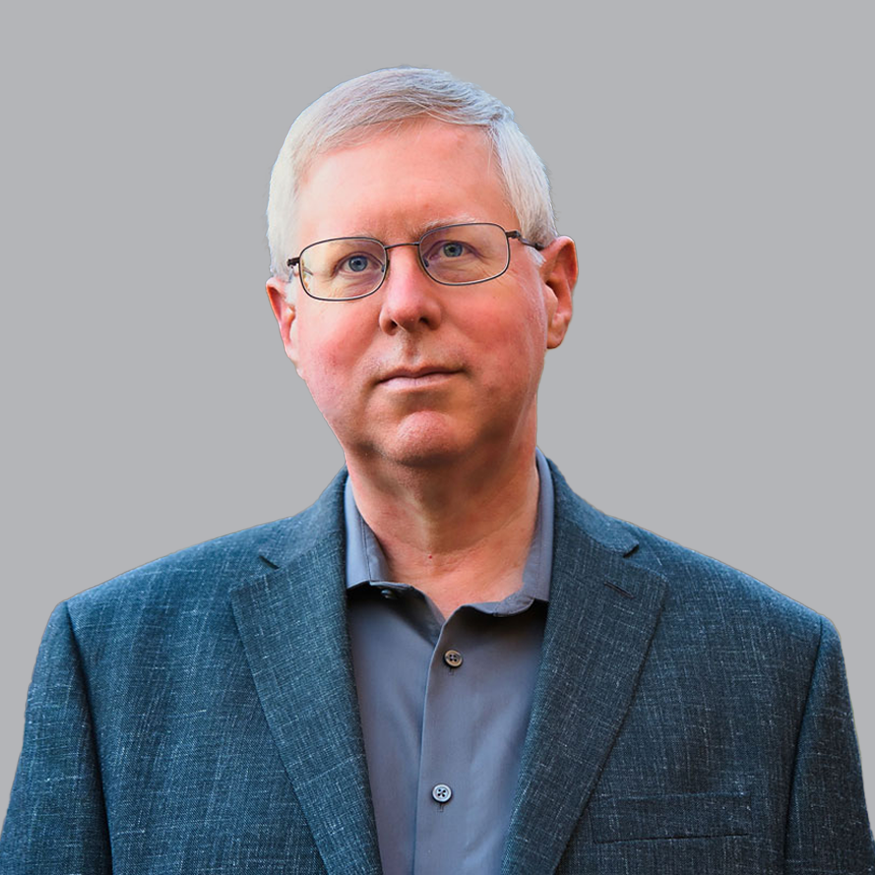
Alan Booker (LEED AP BD+C, WELL AP, LFA, GRP) is the founder and executive director of the Institute of Integrated Regenerative Design, which trains professional design practitioners to create systems that are ecosystemic, biocompatible, and regenerative. With a degree in electrical engineering, he has over 35 years’ experience in engineering and 25 years in sustainable and regenerative design.
Alan is the creator of the Integrated Regenerative Design framework and the lead author of the Biocompatible Design Standard.
Currently, he is completing work on the draft release of the Biocompatible Design Standard and documenting his research into technically-rigorous definitions for the terms regenerative and sustainable in the forthcoming book The Dynamics of Regenerative and Sustainable Holons.
Talk Title: Circular Electronics
Abstract: The miniaturization led advances in electronics during last half century have revolutionized computing, and communication. Digital technologies enabled by advanced electronics are now transforming every sector (e.g., health, aerospace, manufacturing, and retail etc.) of economy. However, these gains come with considerable ecological footprint, throughout the lifecycle of electronic – starting with the use of materials that are not easily available, resource intensive manufacturing processes, designs and strategies which do not encourage repair and reuse, and lack of opportunities for recycling, which has resulted in the tsunami of electronic waste. These issues underline the need to rethink the ways for manufacturing and use of electronics so that various sectors of economy continue to benefit from advances in electronics, and all so with acceptable levels of ecological footprint. Circular approach is one possibility, and this talk will focus on the same.
Ravinder Dahiya, Bendable Electronics and Sustainable Technologies (BEST) Group, Electrical & Computer Engineering Department, Northeastern University, Boston, USA
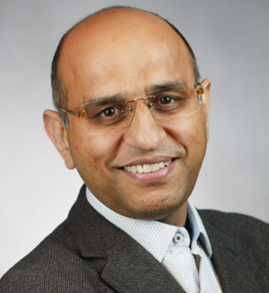
Ravinder Dahiya is Professor in the Department Electrical and Computer Engineering at Northeastern University, Boston, USA. His group (Bendable Electronics and Sustainable Technologies (BEST)) conducts research in flexible printed electronics, electronic skin, and their applications in robotics, wearables, and interactive systems. He has authored or co-authored more than 500 publications, books and submitted/granted patents and disclosures. He has led or contributed to many international projects.
Prof. Dahiya is serving on the Board of Directors of IEEE as Division 10 Director, and he was the President of IEEE Sensors Council during 2022-2023. He is the Editor-in-Chief (EiC) of npj Flexible Electronics and served as the founding EiC of IEEE Journal on Flexible Electronics. He also served on the editorial boards of several other leading journals. He is founder of the IEEE International Conference on Flexible, Printed Sensors and Systems (FLEPS) and served as its General Chair or Technical Programme Chair, as well as of several other international conferences such as IEEE SENSORS. He is recipient of EPSRC Fellowship, Marie Curie Fellowship and Japanese Monbusho Fellowship and has received awards such as Technical Achievement award from IEEE Sensors Council, Young Investigator Award from Elsevier, and 13 best journal/conference paper awards as author/co-author. He is Fellow of IEEE and the Royal Society of Edinburgh.
Talk Title: Lithium Batteries Recycle and Reuse
Babu Chalamala, Sandia National Laboratories
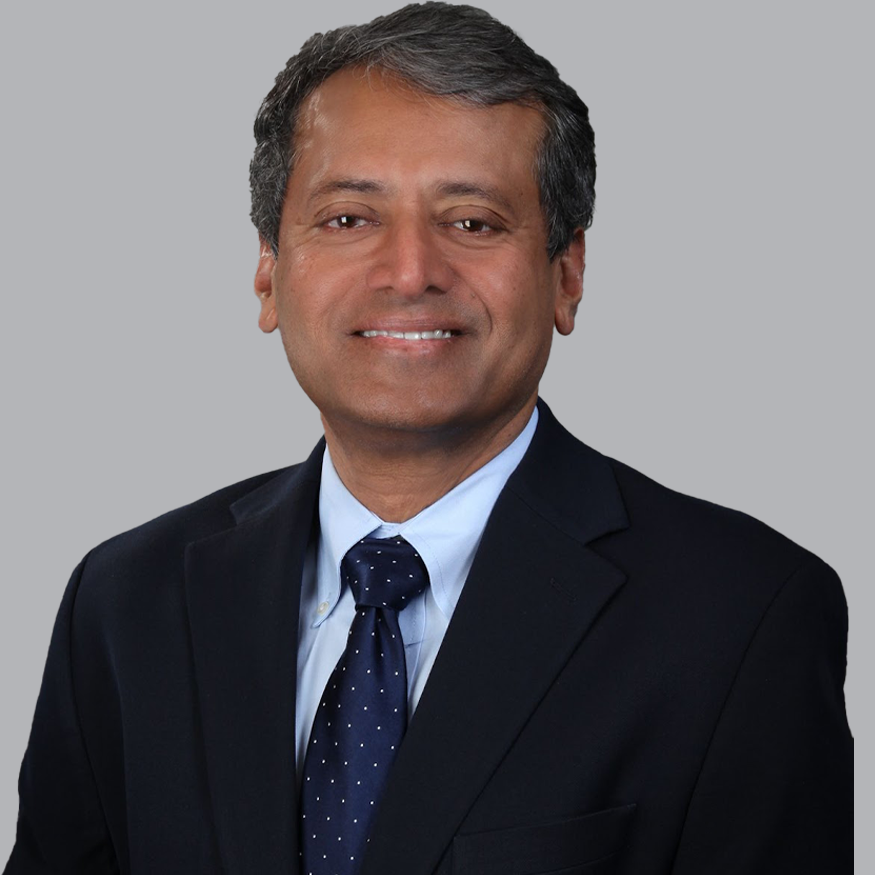
Dr. Babu Chalamala is a Senior Scientist at Sandia National Laboratories. Earlier, he was Head of the Energy Storage Technology and Systems Department and Program Manager for Grid Energy Storage at the laboratory. Prior to joining Sandia in 2015, he was a Corporate Fellow at MEMC Electronic Materials/SunEdison where he led R&D and product development in energy storage technology.
Earlier, as a research staff member at Motorola and Texas Instruments, he made contributions to vacuum microelectronics and flat panel display technologies. He also had founding roles in two startup companies. He is a Distinguished Lecturer of the IEEE Power and Energy Society and a Fellow of the IEEE, AAAS, Materials Research Society, and the National Academy of Inventors. In 2024, he was elected as a member of the National Academy of Engineering and received the IEEE USA Harry Diamond Memorial Award. He was past chair of the IEEE PES Energy Storage and Stationary Battery Technical Committee. He currently serves as Vice President of Conferences and Meetings for IEEE PES and Chair of the Grid Interfaces Committee of the IEEE Transportation Electrification Council.
Talk Title: The Dose Makes the Poison – Too Much Carbon Dioxide
Abstract: Our planet evolved with a carbon cycle where equilibrium existed between carbon dioxide (CO2) on land, in rivers, lakes, and oceans, and in the atmosphere. In modern times, substantial increases of CO2 in the atmosphere from fossil fuel use, deforestation, and other human activities have exceeded the capacity of the oceans to absorb the excess CO2 (Tragedy of the Commons). Thus, we can view the excess CO2 as pollution. Fortunately, research suggests that actions to enhance natural processes can be leveraged to remediate the excess CO2 and restore pre-industrial levels of CO2, similar to how we clean up other pollution.
David Snyder, President, 42TEK LLC
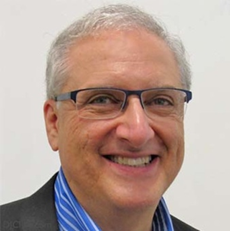
David is a California-registered Civil Engineer (PE), Certified Information Systems Security Professional, Certified Cloud Security Professional, and IEEE Senior Member.
As an environmental engineer, he conducted environmental impact studies for power plants, transmission lines, and pipelines. He managed environmental, health, and safety regulations work for Chevron Pipe Line and then the investigation and remediation of soil and groundwater contamination at industrial sites. He is a member of the IEEE Standard P7100 Environmental Impact of Artificial Intelligence Working Group.
David is the Board Chair of the IEEE Consultants Network of Silicon Valley, a past board member of the Northern California Chapter of the Healthcare Information and Management Systems Society (HIMSS), and has been the organizer, moderator, or speaker for more than 20 conferences and seminars, including the “Security, Standards and Laws” session of the 2024 IEEE World Technology Summit on AI Infrastructure and a panel on “Communications, Computing, and Power during Disaster Response” at the 2022 IEEE Global Humanitarian Technology Conference.