

Webinar Series

Topics Overview for 2025:
| Topic | Date | Speaker | Recording |
|---|---|---|---|
| Why Circular Economies Are Needed | 19 June | Maike Luiken | Access On-Demand at YouTube |
| Introduction to Regenerative Design | 17 July | Alan Booker | Access On-Demand at YouTube |
| Case Studies in Regenerative Design | 14 August | Alan Booker | Access On-Demand at YouTube |
| Circular Electronics | 11 September | Ravinder Dahiya | Access On-Demand at YouTube |
| Restoring the Atmosphere by Removing Excess CO2 Using Nature’s Way | 09 October | David Snyder | Access On-Demand at YouTube |
| Fireside chat on Batteries: Recycle and Reuse | 06 November | Babu Chalamala | Access On-Demand at YouTube |
Format: Free Zoom webinars accessible live by registration, and later through on-demand viewing.
Frequency: Every 4 Thursdays at Noon US Eastern Time starting in June 2025.
Start Date: 19 June 2025
Details: This webinar series builds upon the successful workshop on the same topic held at the IEEE SusTech 2025 conference in Santa Ana, CA, USA. Back by popular demand and made available to a broader audience, it includes presentations on Regenerative Design, Circular Electronics, CO2 Pollution reversal, and many more. Presentations were be followed by live Q&A with registered attendees. Recorded webinars are posted for free on-demand viewing. The program posted below is tentative. Actual talk titles may vary slightly from announced topic areas.
Past Presentations
1) Topic Area: Recycle and Reuse of Batteries: Review of EV and Grid Storage Industry Strategies (06 November 2025 at noon ET)
Presented by Babu Chalamala, Sandia National Laboratories
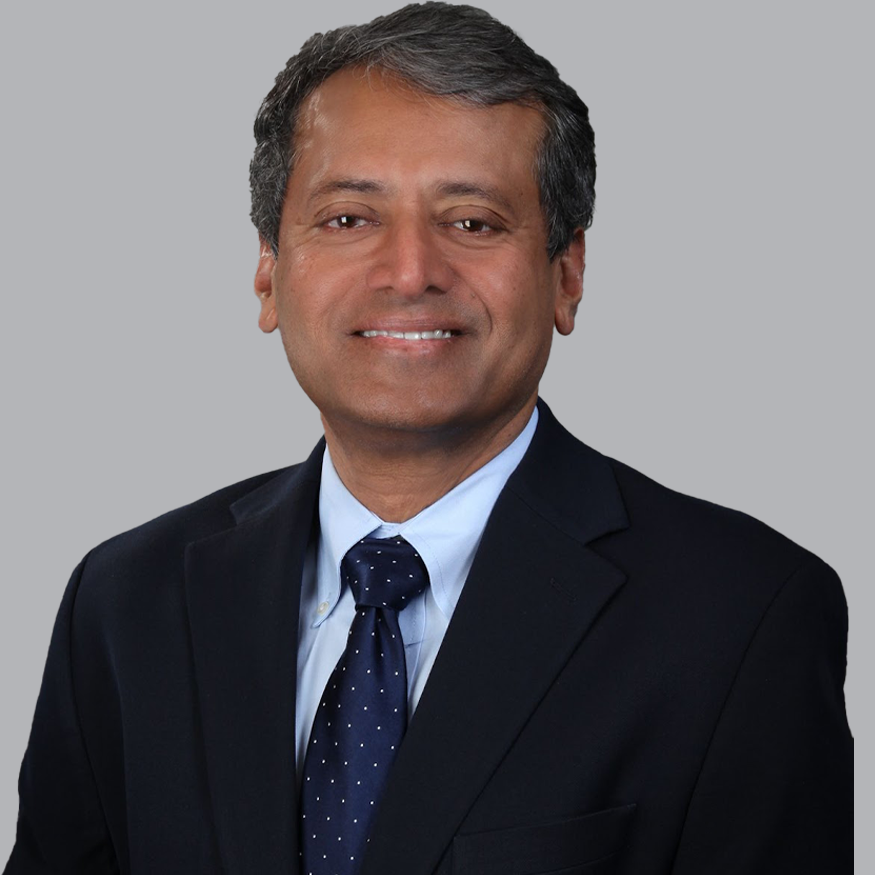
Dr. Babu Chalamala has recently joined the University of Texas at Dallas as a Professor of Materials Science and Engineering, and Electrical and Computer Engineering. He holds the Jonsson School Distinguished Chair in Engineering. Until October 2025, he served as a Senior Scientist at Sandia National Laboratories. Earlier, he was Head of the Energy Storage Technology and Systems Department and Program Manager for Grid Energy Storage at the laboratory. Prior to joining Sandia in 2015, he was a Corporate Fellow at MEMC Electronic Materials/SunEdison where he led R&D and product development in energy storage technology.
Earlier, as a research staff member at Motorola and Texas Instruments, he made contributions to vacuum microelectronics and flat panel display technologies. He also had founding roles in two startup companies. He is a Distinguished Lecturer of the IEEE Power and Energy Society and a Fellow of the IEEE, AAAS, Materials Research Society, and the National Academy of Inventors. In 2024, he was elected as a member of the National Academy of Engineering and received the IEEE USA Harry Diamond Memorial Award. He was past chair of the IEEE PES Energy Storage and Stationary Battery Technical Committee. He currently serves as Vice President of Conferences and Meetings for IEEE PES and Chair of the Grid Interfaces Committee of the IEEE Transportation Electrification Council.
2) Topic Area: Restoring the Atmosphere by Removing Excess CO2 Using Nature’s Way (09 October 2025 at noon ET)
Presented by David Snyder, Chief Operations Officer, DeepGreen Solutions
David is a California-registered Civil Engineer (PE), Certified Information Systems Security Professional, and IEEE Senior Member. He is helping to drive the efforts of DeepGreen Solutions to develop and implement technology to replicate the natural process whereby the growth of phytoplankton in the open ocean is stimulated to remove large amounts of CO2 from the atmosphere worldwide through photosynthesis.
David is the Board Chair of the IEEE Consultants Network of Silicon Valley and has been the organizer, moderator, or speaker for more than 20 conferences and seminars, including the “Security, Standards and Laws” session of the 2024 IEEE World Technology Summit on AI and presented “Implementing Climate Restoration This Decade” at the 2025 IEEE Sustainable Technology conference.
3) Topic Area: Circular Electronics (11 September 2025)
Speaker: Ravinder Dahiya, Bendable Electronics and Sustainable Technologies (BEST) Group, Electrical & Computer Engineering Department, Northeastern University, Boston, USA
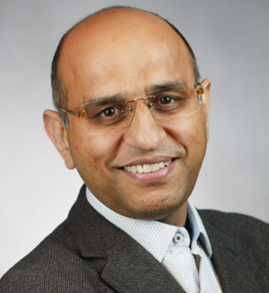
Ravinder Dahiya is Professor in the Department Electrical and Computer Engineering at Northeastern University, Boston, USA. His group (Bendable Electronics and Sustainable Technologies (BEST)) conducts research in flexible printed electronics, electronic skin, and their applications in robotics, wearables, and interactive systems. He has authored or co-authored more than 500 publications, books and submitted/granted patents and disclosures. He has led or contributed to many international projects.
Prof. Dahiya is serving on the Board of Directors of IEEE as Division 10 Director, and he was the President of IEEE Sensors Council during 2022-2023. He is the Editor-in-Chief (EiC) of npj Flexible Electronics and served as the founding EiC of IEEE Journal on Flexible Electronics. He also served on the editorial boards of several other leading journals. He is founder of the IEEE International Conference on Flexible, Printed Sensors and Systems (FLEPS) and served as its General Chair or Technical Programme Chair, as well as of several other international conferences such as IEEE SENSORS. He is recipient of EPSRC Fellowship, Marie Curie Fellowship and Japanese Monbusho Fellowship and has received awards such as Technical Achievement award from IEEE Sensors Council, Young Investigator Award from Elsevier, and 13 best journal/conference paper awards as author/co-author. He is Fellow of IEEE and the Royal Society of Edinburgh.
4) Topic Area: Case Studies in Regenerative Design (14 August 2025)

Abstract: Operational examples of regenerative systems are actually rare, with many of them involving technologies that directly partner with life, such as the quickly expanding field of regenerative agriculture. In this presentation, we will explore examples of regenerative systems already in place, then imagine what future technological developments might make possible.
Presented by Alan Booker, President, Executive Director, The Institute of Integrated Regenerative Design
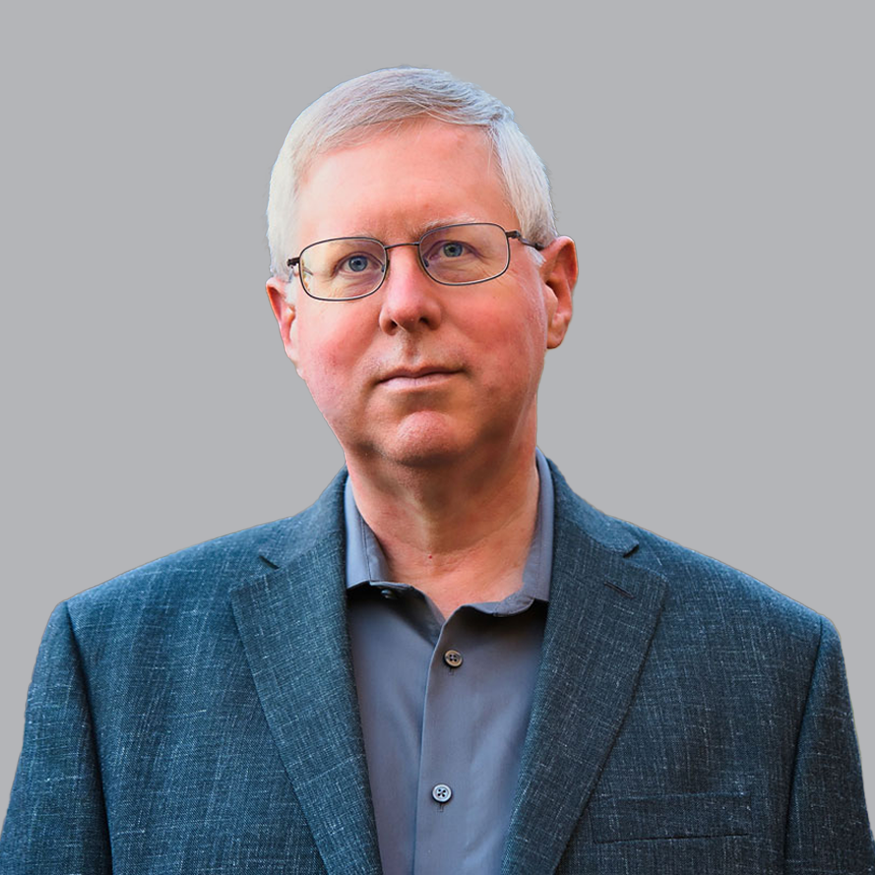
Alan Booker (LEED AP BD+C, WELL AP, LFA, GRP) is the founder and executive director of the Institute of Integrated Regenerative Design, which trains professional design practitioners to create systems that are ecosystemic, biocompatible, and regenerative. With a degree in electrical engineering, he has over 35 years’ experience in engineering and 25 years in sustainable and regenerative design.
Alan is the creator of the Integrated Regenerative Design framework and the lead author of the Biocompatible Design Standard.
Currently, he is completing work on the draft release of the Biocompatible Design Standard and documenting his research into technically-rigorous definitions for the terms regenerative and sustainable in the forthcoming book The Dynamics of Regenerative and Sustainable Holons.
5) Topic Area: Introduction to Regenerative Design (17 July 2025)

Abstract: An increasing number of projects make the claim of being regenerative, when in reality most of them are only marginally less degenerative than standard industry practices. A more technically rigorous definition of the concept of regeneration is needed, along with verifiable metrics that can be used to validate claims as to whether projects actually meet this goal. Starting with the thermodynamics of how life creates order in the face of the Second Law, we will explore what it will take for technologies to become functionally regenerative.
Presented by Alan Booker, President, Executive Director, The Institute of Integrated Regenerative Design
Alan Booker (LEED AP BD+C, WELL AP, LFA, GRP) is the founder and executive director of the Institute of Integrated Regenerative Design, which trains professional design practitioners to create systems that are ecosystemic, biocompatible, and regenerative. With a degree in electrical engineering, he has over 35 years’ experience in engineering and 25 years in sustainable and regenerative design.
Alan is the creator of the Integrated Regenerative Design framework and the lead author of the Biocompatible Design Standard.
Currently, he is completing work on the draft release of the Biocompatible Design Standard and documenting his research into technically-rigorous definitions for the terms regenerative and sustainable in the forthcoming book The Dynamics of Regenerative and Sustainable Holons.
Moderator: Charlie Jackson,Chair, IEEE Conferences Committee, Engineer (ret.) Northrop Grumman
6) Topic Area: Why Circular Economies Are Needed (19 June 2025)

In this introductory session, Dr. Maike discussed why the circular economies are needed, today’s global challenges, and summarized the presentation. At the end of the presentation, there was an interactive Q/A session with the attendees where the speaker replied to the questions.
Presented by Dr. Maike Luiken, PhD, SMIEEE, IEEE-HKN, FEIC, FCAE, is managing director, R&D, at a start-up company, Carbovate Development, and Adjunct Research Professor, Western University, Canada.

Dr. Luiken is a longtime advocate for sustainable development and for the deployment and use of technology that is ‘sustainable by design’ to achieve a long-term healthy planetary biosphere. Her areas of interest and expertise span diverse technical areas from ICT, energy, and water to advanced manufacturing. She has particular interest in how progress and deployment of various technologies contributes – or not – to achieving sustainable development.
She is a member of the IEEE Standard Association Board of Governors and the IEEE SSIT Board of Governors. She chairs IEEE Planet Positive 2030, the IEEE P7800TM Standards Working Group: Recommended Practice for Addressing Sustainability, Environmental Stewardship and Climate Change Challenges in Professional Practice, and the Green Hydrogen IEEE SA Industry Connections Program. She is a co-chair, IEEE Future Directions SusTech Initiative.
Maike’s career spans academia and industry in Canada, USA and Germany. She is/has been serving on numerous Boards of Directors and Committees, including IEEE and the Canadian Standards Council Steering Committee of the Artificial Intelligence and Data Governance Standardization Collaborative.
Moderator: Carole D. Graas: PhD, SMIEEE, Program Director – Future Directions